












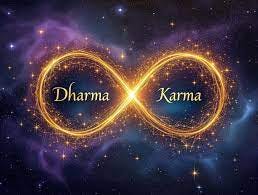
Dharma Karma – A Modern Way To Life

Dharma & Karma: The Invisible Code That Runs Our Lives
In Indian philosophy, Dharma and Karma aren’t abstract religious buzzwords. They are practical ideas—almost like an operating system—for how life works. You may not consciously think about them, but they quietly influence every choice you make, every consequence you face, and every turning point in your journey.
What Is Dharma, Really?
Dharma is often translated as duty, but that’s a narrow view. Dharma is your right way of living—the principles that hold your life together. It’s the alignment between who you are, what you do, and what the world needs from you.
Your dharma changes with context:
-
A student’s dharma is to learn with sincerity
-
A leader’s dharma is to act with fairness
-
A parent’s dharma is to protect and guide
-
An individual’s dharma is to stay truthful to their conscience
Dharma is not rigid morality. It’s situational wisdom. Sometimes telling the truth is dharma; sometimes protecting someone from harm is dharma. The essence is balance, responsibility, and integrity.
Karma: The Law of Cause and Effect
Karma is simpler—but unforgiving. Every action, intention, and even inaction creates an imprint. That imprint eventually returns as experience.
Karma is not punishment or reward. It’s feedback.
-
Act with greed → you create instability
-
Act with compassion → you create trust
-
Act with fear → you attract fear
-
Act with clarity → you invite clarity
Importantly, karma doesn’t work on our timelines. Some consequences arrive instantly. Others take years—or lifetimes. But nothing is lost.
How Dharma and Karma Work Together
Think of it this way:
-
Dharma is the compass
-
Karma is the journey
When you follow your dharma, your karma tends to purify. Even if outcomes are painful, they don’t break you—they shape you. When you ignore dharma, karma becomes chaotic. Life starts feeling unfair, heavy, and repetitive, as if the same lesson keeps knocking.
Many people ask, “Why do bad things happen to good people?”
From this lens, the better question is: What lesson is trying to surface? Karma isn’t always about this lifetime’s actions alone—it’s about unresolved patterns seeking balance.
Modern Life, Ancient Truth
In today’s world, dharma shows up in subtle ways:
- Choosing ethics over shortcuts at work
- Speaking up when silence is easier
- Letting go of ego in relationships
- Acting correctly even when no one is watching
And karma shows up too:
-
Burnout after years of self-neglect
-
Peace after choosing honesty
-
Repeated conflicts from unresolved behavior
You don’t need to believe in reincarnation to see karma at work. Just observe patterns.
The Quiet Power of Right Action
The Bhagavad Gita offers a powerful idea: Do your duty without attachment to results. This is where dharma and karma find harmony. You act rightly, not because it guarantees success, but because it is right. Outcomes then lose their power to disturb you.
When action is aligned with dharma, karma becomes a teacher—not a burden.
Closing Thought
Life doesn’t demand perfection. It asks for awareness.
Every moment gives you a choice:
-
Act from fear or from clarity
-
From ego or from responsibility
-
From habit or from dharma
Karma will respond honestly.
And over time, if you listen closely, life itself will guide you back to balance.
That is the quiet promise of Dharma and Karma.





Responses