









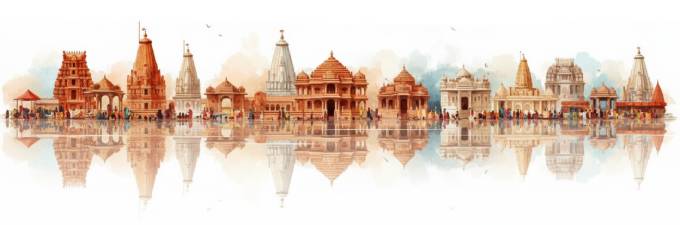


Yuva Jyoti Mandir stands as a beacon of light and unity, where the timeless wisdom of our heritage meets the vibrant energy of youth. The name Yuva Jyoti, meaning “Flame of Youth”, reflects the temple’s mission to ignite the spark of dharma, creativity, and cultural pride in the hearts of the younger generation. Nestled in a space that honors the sacred traditions of South Asia, this temple blends classical architecture with modern vitality, creating a sanctuary for all who seek spiritual growth, community, and connection to their roots. With its serene sanctum and vibrant sabha hall, Yuva Jyoti Mandir invites worshippers and visitors alike to come together in celebration, reflection, and service. From the glow of the eternal flame to the resonating echoes of traditional bhajans, it is a place where the light of youthful ambition is nourished by the wisdom of ancient teachings. Here, every prayer, every festival, and every gathering is an opportunity to spark new beginnings, preserve our rich culture, and carry the flame of dharma into the future.
- Diwali Lakshmi Puja
- Holika Puja
Berea
KwaZulu-Natal
4001
South Africa

- Free Parking,
- Toilets,
- Wheelchair,
- Drinking Water,
- Canteen,
- Air Condition,
- Wi-Fi,
- PhotoBooth,
- Fire Exit
1. Respect for the Divine and Space
Mindfulness in Presence: All visitors and community members should approach the temple with reverence, keeping in mind that it is a sacred space for worship, reflection, and connection.
Appropriate Dress Code: Modest clothing is encouraged. While the temple fosters a youthful and creative environment, it’s important to maintain a respectful demeanor, especially during prayers or rituals.
Silence During Worship: During aarti and other sacred rituals, participants should maintain silence or speak softly to avoid disrupting the spiritual atmosphere.
2. Community Involvement and Service
Volunteering for Seva: Youth are encouraged to actively participate in the temple’s seva (selfless service) activities such as organizing events, maintaining the temple premises, assisting during festivals, and supporting community outreach programs.
Inclusive Participation: The temple welcomes people of all backgrounds to take part in community events, prayers, and social initiatives. Respect for diverse cultural and spiritual practices is a core value.
3. Spiritual Learning and Practice
Study and Reflection: Regular study groups will be held, focused on ancient texts like the Bhagavad Gita, Ramayana, Mahabharata, and Upanishads, along with modern interpretations of spiritual teachings. Youth are encouraged to engage and ask questions to deepen their understanding.
Daily Prayers and Rituals: Regular prayers and rituals (such as Mangal Aarti, Sankirtan, and Bhajan) are held to foster a routine of spiritual devotion, inner peace, and divine connection.
Youth Mentorship: Older members of the community will serve as mentors for younger members, guiding them spiritually, personally, and professionally. This helps create a supportive atmosphere for growth.
4. Creative Expression and Celebration
Cultural and Artistic Freedom: Youth are encouraged to express themselves through art, music, dance, and other creative forms of worship. These expressions are valued as contributions to the temple’s spiritual and cultural fabric.
Event Participation: The temple hosts regular cultural events, including bhajans, dances, skits, and art exhibits. These are open to all members, with a special focus on youth involvement.
5. Respect for All Faiths
Interfaith Unity: The temple fosters an atmosphere of respect and mutual learning between various faiths. Special occasions such as Eid, Christmas, and Passover may also be observed, fostering greater understanding between different communities.
Non-Proselytization: While the temple is a space for spiritual growth based on Sanatan Dharma, it encourages open-mindedness and respect toward all paths of faith, with an emphasis on learning rather than conversion.
6. Environmental Responsibility
Eco-Friendly Practices: The temple aims to minimize its ecological footprint by using eco-friendly materials, reducing waste, and maintaining a green temple environment. The community is encouraged to participate in environmental initiatives, such as tree planting and clean-up drives.
Sustainable Offerings: Devotees are encouraged to make sustainable offerings, such as flowers instead of non-biodegradable items and to avoid excessive use of incense or other products that contribute to air pollution.
7. Safety and Well-Being
Health Protocols: During the ongoing health concerns, health guidelines such as sanitization, social distancing, and mask-wearing (if needed) should be observed.
Conflict Resolution: The temple promotes harmony within the community. If there are any conflicts, they should be addressed with respect and through peaceful means, following the teachings of dharma (righteousness).
8. Celebrating Youth Empowerment
Leadership Roles: Youth are encouraged to take on leadership roles within the temple, whether it’s organizing events, leading worship, or helping with social service activities.
Skill Development: Regular workshops, seminars, and skills training (in areas like leadership, public speaking, creativity, etc.) will be held to help the youth develop skills for their spiritual, personal, and professional lives.
Respect for Tradition and Innovation: While the temple honors tradition, it also allows space for innovation. New ideas for rituals, community engagement, and artistic expression are encouraged, as long as they align with the temple’s core spiritual principles.
9. Financial Contributions
Donations and Offerings: Donations to the temple are voluntary and should always be given with an open heart. Contributions can be used for maintaining the temple, supporting community events, and funding charitable causes.
Transparency and Accountability: All financial activities, including donations, are managed transparently. Regular updates on financial matters will be shared with the community to ensure trust and integrity.
10. Respectful Behavior
General Conduct: All members of the temple community, especially youth, are encouraged to embody the qualities of humility, respect, and compassion both within and outside the temple.
Conflict-Free Environment: The temple should be a space free of gossip, discrimination, and conflict. Any grievances should be addressed with the temple leadership in a calm and respectful manner.
Yuva Jyoti Mandir was envisioned as a sacred space where the timeless traditions of South Asian spirituality could be passed down to future generations, especially the vibrant youth of the community. The temple's creation traces its origins to a vision shared by a group of culturally conscious youth who sought to honor their ancestral roots while embracing the ever-evolving spirit of the modern world.
The name Yuva Jyoti, meaning “Flame of Youth”, was chosen as a reflection of the temple’s founding principles: to keep the sacred flame of dharma alive, while nurturing the dreams, creativity, and energy of the younger generation. The idea was born out of a desire to merge ancient rituals with the dynamic pulse of contemporary culture — a place where the younger community could connect with their heritage without feeling detached from the modern world they navigate.
Inspired by the architectural styles of North Indian Nagara and South Indian Dravidian temples, the design of the temple integrates intricate stone carvings and towering shikharas with clean lines and bright spaces, offering both a space for spiritual introspection and vibrant cultural exchange. As the temple took shape, it drew from the deep legacy of temples of knowledge like Nalanda and Takshashila, which were once thriving centers of learning and intellectual exchange for youth across South Asia.
The temple’s construction was supported by the collaboration of spiritual leaders, young artists, and architects who were passionate about blending traditional craftsmanship with the needs of the modern community. Over the years, Yuva Jyoti Mandir has become more than just a temple — it has evolved into a cultural and spiritual hub for young people from diverse backgrounds, uniting them in the pursuit of self-discovery, spiritual growth, and collective service.
Each festival, recital, and community gathering at Yuva Jyoti is infused with the spirit of innovation and respect for the ancient dharma, creating a space that celebrates the heritage of South Asia while paving the way for the next generation to lead with wisdom, creativity, and unity. Today, the temple stands as a testament to the fusion of the old and the new, and its flame continues to burn brightly, guiding young hearts on their spiritual journey.
The architecture of Yuva Jyoti Mandir seamlessly integrates traditional South Asian temple styles with contemporary design elements, creating a space that feels both timeless and modern. The grand shikhara, or temple tower, rises majestically above the entrance, adorned with intricate carvings of deities, sacred symbols, and motifs from nature, reflecting the deep spiritual heritage of India. Constructed from white marble and sandstone, the exterior exudes an aura of purity and permanence, while the copper kalash at the top symbolizes the presence of divine energy. As visitors approach, they are greeted by a lotus-shaped water pond, representing purity and the eternal cycle of life, with the scent of incense filling the air, setting a serene tone for reflection and devotion. Inside, the Garbhagriha (sanctum) houses a deity or symbolic flame — a representation of the inner light and spark of life, surrounded by gold leaf designs and traditional mural paintings that narrate the stories of youth, strength, and transformation. The Pradakshina path, which allows devotees to walk in reverence around the sanctum, is lined with vibrant rangoli-style patterns and LED light fixtures that infuse the space with color and energy, making it both sacred and alive. The Sabha Mandap (gathering hall) is an expansive space where the youth of the community can engage in cultural events, with contemporary design features like open seating, high ceilings, and large windows that invite natural light, symbolizing clarity and openness. This temple is not just a place of worship, but a harmonious blend of tradition and modernity, offering a sacred space where past, present, and future unite.
1. The Legend of the First Flame: The Birth of Yuva Jyoti
According to an ancient legend, when the universe was in its primal form, there was only one eternal light, the Jyoti, which guided the souls of the universe through chaos. This light was not a mere flame but a beacon of wisdom, creativity, and balance. As time passed, this divine flame descended to Earth and found its home in the heart of a young sage named Yuvendra, who was destined to be the guardian of knowledge and youth.
The young sage, filled with the spark of Brahma’s creative energy, wandered across the land, spreading wisdom and igniting the flame of knowledge wherever he went. One day, in a deep forest, he discovered a lotus flower blooming in a serene pond. As he meditated, the flower blossomed and a spark rose from it, lighting the skies. The divine voice of Saraswati, Goddess of Wisdom, echoed in the air:
"From this flame, the light of youth and wisdom will shine, keeping alive the balance of the world. The Yuva Jyoti will be carried forth through generations."
Yuvendra, feeling the weight of this divine message, built the first temple on the shores of the sacred pond where the lotus had bloomed. Thus, the legend of the Yuva Jyoti Mandir was born, as a place where the flame of youth and knowledge would never be extinguished.
2. The Tale of the Eternal Flame: The Flame of Courage
In the ancient kingdom of Prithviloka, there lived a young warrior-prince named Aryavira. He was known for his unmatched valor and wisdom, which came from a deep connection with the divine forces of the universe. One day, a demon king named Kailasura, who had terrorized the land for centuries, threatened to engulf the entire kingdom in darkness and despair.
As the king’s armies marched toward the capital, Aryavira sought guidance from the temple of the Divine Flame. The flame, said to hold the essence of Agni (the fire god), was known to bestow courage and victory upon those who sought it with a pure heart. However, the flame was hidden deep within the Garbhagriha of the temple and could only be accessed by one who demonstrated unwavering faith and courage.
With a heart full of resolve, Aryavira entered the sacred temple and meditated before the flame. As he sat in deep concentration, the flame suddenly leapt from its sacred altar, engulfing him in a radiant glow. At that moment, the Agni flame whispered:
"Courage lies not in the absence of fear, but in the strength to rise against it. Carry this flame, and you shall be victorious."
Empowered by the divine energy, Aryavira defeated Kailasura in battle, and the kingdom was saved. From then on, the temple became known as Yuva Jyoti Mandir, the Temple of Eternal Courage, where the flame of bravery is passed on to each generation.
3. The Story of the Lotus Pond: The Heart of Youth
In the ancient city of Chandrapura, a mighty king named Suryadev ruled with wisdom and compassion. However, his heart was weighed down by the loss of his beloved daughter, Vishalakshi, who had passed away at a young age. Consumed by grief, Suryadev withdrew from his duties, and the kingdom began to fall into turmoil.
One day, while wandering in the royal gardens, Suryadev stumbled upon a lotus pond that had once been a favorite place of his daughter. In the middle of the pond, a lone lotus bloomed, untouched by time. As the king sat by the water, the Goddess Lakshmi appeared before him in a vision. She spoke softly:
"The lotus blooms in the darkness of the night, untouched by the storm. Just as youth rises from the depths of sorrow to embrace new beginnings, so too shall your kingdom rise from this grief."
The goddess guided the king to plant a flame by the lotus, representing the eternal spirit of youth — an energy that could overcome sorrow, loss, and despair. The Yuva Jyoti, the divine flame of youth, was kindled and placed at the center of the lotus pond. From that moment, the kingdom flourished once more, and the people of Chandrapura rebuilt their lives with renewed strength.
The story of Vishalakshi’s Lotus Pond continues to inspire generations, and the temple of Yuva Jyoti Mandir now sits by the sacred waters, reminding all that from sorrow can rise the light of youth, hope, and new beginnings.
4. The Legend of the Youthful Sage: Rishi Kartik
In ancient times, there lived a sage named Kartik, known for his deep devotion and youthful exuberance. Unlike other sages who meditated in solitude, Kartik believed in sharing his wisdom with the world, especially with the youth. He roamed across villages, teaching the scriptures and engaging in lively discussions about dharma, life, and the universe.
One day, while meditating on the banks of the sacred Sarasvati River, Kartik encountered a mysterious vision — a divine flame floating above the waters. As he gazed into the flame, a voice called out:
"Kartik, your spirit is like this flame — full of youthful energy, yet grounded in wisdom. Build a sanctuary where the flame of knowledge and energy will forever illuminate the hearts of the youth."
Guided by this vision, Kartik founded a temple that would become the Yuva Jyoti Mandir, where young minds could seek knowledge, learn the sacred arts, and ignite the flame of dharma in their own hearts. The temple is said to have been built on the very spot where Kartik received the divine vision, and to this day, it is believed that his spirit continues to guide the youth who come seeking knowledge and wisdom.
Lord Krishna, the eighth incarnation of Lord Vishnu, is revered as the divine embodiment of love, wisdom, and divine playfulness. Known for his mischievous childhood exploits, his role as the charioteer and guide to Arjuna in the Bhagavad Gita, and his deep connection to the heart of the devoted, Krishna represents the perfect balance between divine transcendence and earthly joy. With his flute, he symbolizes the call of the divine to all beings, guiding them toward inner harmony, wisdom, and love. Krishna’s teachings emphasize living with dharma, acting without attachment, and pursuing the path of devotion, making him the ideal deity for those seeking spiritual growth, creativity, and connection to their true self. His life and message inspire not just devotion, but a joyous embrace of life’s experiences.
- Ganesha
- Saraswati
- Shiva
1. The Festival of Light and Knowledge: Jyoti Utsav
Description: This annual festival celebrates the eternal flame of knowledge and the divine light that guides the youth in their journey of wisdom and self-discovery. Jyoti Utsav takes place during the Vasant Panchami festival (the arrival of spring and the day of Goddess Saraswati). The community gathers in the evening to light thousands of diyas (oil lamps) around the temple, symbolizing the illumination of minds and hearts.
Ritual:
Flame Lighting Ceremony: The ceremony begins with a procession of youth carrying small lamps, led by the temple priest. Each individual lights their lamp at the central flame of the temple, which is then used to ignite all other lamps, symbolizing the spreading of knowledge and wisdom.
Offering of Knowledge: Young members of the community are invited to offer books, artworks, and musical instruments to Krishna or Saraswati, symbolizing their commitment to learning and creativity.
Evening of Music and Dance: The festival continues with traditional performances, including bhajans (devotional songs), kirtans (chanting), and classical dance performed by youth, celebrating both devotion and the vibrancy of life.
**2. The Youthful Dance of Divine Energy: Nataraja Aarti
Description: This unique ritual honors Lord Shiva in his Nataraja form, celebrating the rhythm of the cosmos and the creative energy within youth. It is performed once a month during the full moon night, a time when energy and creativity are at their peak.
Ritual:
Choreographed Dance Procession: Devotees, especially young people, gather in the temple courtyard where a choreographed tandava dance (cosmic dance) is performed in sync with traditional drumming. The dance symbolizes the destructive and creative forces of the universe — youth taking charge of their energy, passions, and goals in life.
Aarti with Dance: The ritual culminates in the offering of aarti (a devotional song) to Lord Shiva, with the temple deity of Nataraja at the center of the dance. As the devotees circle the idol, their dance movements are synchronized with the music, invoking the divine energy of creation and destruction. This ritual helps channel the spiritual energies of youth into personal growth and community unity.
**3. The Creative Offering: Vivid Pranam
Description: The Vivid Pranam is a unique offering where youth are encouraged to express their devotion through art, music, and creativity. Unlike traditional offerings like flowers or incense, this ritual allows them to contribute their personal creations to the temple as a form of spiritual devotion.
Ritual:
Art and Music Offerings: Young artists and musicians offer their paintings, sculptures, and compositions to the deity. The community gathers to celebrate these creative acts, with an exhibition and performance space set up around the temple. Each piece is accompanied by a short explanation by the creator, sharing how their artwork or music connects them to their spiritual journey.
Interactive Worship: Youth are also invited to engage in interactive worship — creating rangoli (floor art) or sand mandalas to adorn the temple, using vibrant colors and patterns that symbolize their unique journey toward divine knowledge.
**4. The Journey of the Flame: Agni Pariksha
Description: This ritual honors the concept of inner strength and transformation. It is inspired by the ancient Agni Pariksha (trial by fire), symbolizing the youth’s ability to overcome trials, doubts, and obstacles on their spiritual path.
Ritual:
Inner Fire Meditation: The ritual begins with a silent meditation led by a senior guru, during which the youth reflect on their inner challenges and desires. They then offer a small flame from their hearts to the central sacred flame of the temple, symbolizing their intention to burn away negative tendencies and obstacles.
Firewalk Ritual: For those who wish to demonstrate their spiritual growth and strength, the temple offers a safe firewalk across bed of embers (with appropriate guidance), symbolizing the ability to walk through life's difficulties with faith, courage, and determination. The walk is preceded by a purification and blessing ceremony, where participants are guided to face their fears and grow stronger in their beliefs.
Divine Affirmations: After the firewalk, participants receive a blessing from the priest and are invited to write down their personal goals for growth, which are later burned in the sacred fire, symbolizing their dedication to personal transformation.
**5. The Symphony of Devotion: Svara Yajna
Description: A highly unique ritual that blends traditional worship with the power of music. Svara Yajna (the Yajna of sound) is an offering to the deity through the medium of sound vibrations, using instruments, voices, and mantras to create a divine atmosphere of devotion and connection.
Ritual:
Musical Offering: The youth in the community are invited to offer their musical talents — whether through classical instruments, vocal mantras, or modern instruments like guitars and drums. These sound vibrations are believed to elevate the soul and bring blessings from the divine.
Kirtan Chanting: Kirtans (devotional songs) and bhajans are performed by a youth choir, with lyrics focused on Krishna, Saraswati, or other deities. The musical offering is believed to purify the mind and soul, invoking spiritual awakening.
Sonic Prayers: Following the music, the priest leads the congregation in a chanting of mantras that resonate with universal truths, symbolizing the harmony of sound and the divine order.
**6. The Path of Service: **Seva Yatra
Description: As part of the temple’s commitment to service, youth are encouraged to embark on a Seva Yatra, a ritual of voluntary service to the community and the greater society. This ritual emphasizes the principle of selfless action (seva), which is central to the temple’s teachings.
Ritual:
Service Projects: During this ritual, youth are tasked with organizing and leading community service projects such as tree planting, clean-up drives, and food distribution. The temple provides resources and organizes group trips to various social service organizations.
Blessing for Service: At the beginning of each Seva Yatra, the youth gather at the temple to receive a blessing for their work. They are reminded that their actions are an offering to the divine, with each act of kindness and selflessness creating ripples of positive energy.
Gratitude Ceremony: At the end of the project, the youth return to the temple, where they share their experiences and express gratitude for the opportunity to serve. This is followed by a collective prayer of thanksgiving, offering the fruits of their service back to the divine.
Sorry, no records were found. Please adjust your search criteria and try again.
Sorry, unable to load the Maps API.





https://www.instagram.com/reel/C6dTYeMNZ_x/


- Diwali Lakshmi Puja
- Holika Puja
- Diwali Lakshmi Puja
- Holika Puja

Community Recycling Fund
To foster environmental responsibility and promote sustainable practices, we propose the creation of a Community Sustainability Fund focused on waste management. The aim of this initiative is to encou
Past Events

The Importance of Youth: Shaping the Future of Our World
Youth is more than just a stage of life—it is the energy, creativity, and drive that propels society forward. In every community, the youth represen…
Jobs
| Roles | Members | Start Date | End Date |
|---|---|---|---|
 Volunteer coordinator Volunteer coordinatorVolunteer coordinators for charities recruit, train and organise volunteers who help an organisation fulfil its mission of aiding people in need. Their primary task is to train volunteers adequately so that they have the skills necessary to perform their tasks. Volunteer coordinators track volunteer hours, attendance and performance so that they can ensure they're meeting expectations. For this, they place volunteers where they're needed most and communicate regularly about how they're doing. |

|
10 Sep, 2025 | Present |

Responses